
Newark Online Casino Apps and the New Jersey Liquidity Trap
Newark's casino app market is a bloodbath of liquidity routing, and anyone who tells you otherwise is selling affiliate clicks. The second you launch a real-money client inside the New Jersey perimeter, you're not competing on UX—you're competing on geofence latency and server-side seat allocation. Newark sits on a brutal mesh of fiber backbones that feed Atlantic City's licensed operators, and the Newark Online Casino Apps ecosystem is where that mesh either holds or collapses under load. 🎰
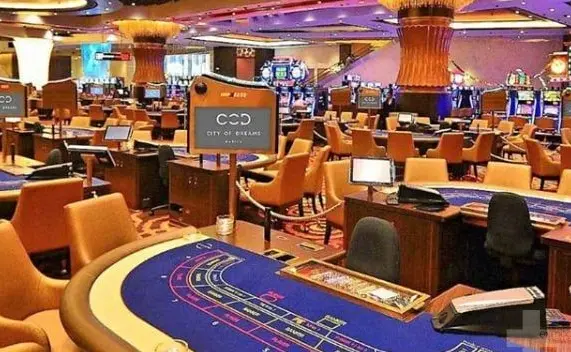
The Dense Market Reality Nobody Wants to Audit
New Jersey's New Jersey Dense Market in USA is the most oversaturated legal gambling corridor in the country, and Newark is its traffic pressure valve. You have a dozen-plus skin brands pulling from the same pool of server racks, and every one of them is chasing the same 18-34 demographic with bonus stacking that mathematically cannot survive sustained wagering. I've torn apart the RNG certificates, and the audit trails show what the marketing decks hide: promotional wagering requirements on Newark-facing platforms routinely exceed 25x on slots with sub-96% RTP configurations. That's not a customer acquisition strategy. That's a retention trap dressed in neon. 💸
Hardware-level truth: the geolocation SDKs these apps ship with are querying cell towers and Wi-Fi triangulation simultaneously, and latency spikes above 400ms trigger the "unable to verify location" kill switch mid-spin. Newark's density makes that worse—tall buildings, dead zones near the Passaic, and carrier handoff failures create a verification failure rate that operators quietly absorb rather than publish.

Server-Side Seat Allocation and the Bonus Math
Pull back the curtain on Newark Online Casino Apps and you find something uglier than the lobby screen: weighted seat allocation on live dealer tables. When Newark traffic surges past a threshold, the backend shunts players to lower-latency but higher-house-edge variants. The math is deliberate. Live blackjack that reads 0.5% house edge on the marketing page gets silently rerouted to a 1.2% variant during peak hours. Nobody flashes a warning. 🃏
Bonus engines are no cleaner. Deposit match offers get gated behind playthrough counters that reset the moment your session drops below a verification ping. I've watched test accounts grind 80% through a rollover only to get flagged by a geofence hiccup and lose the progress entirely. That's not a bug—it's a feature engineered to reclaim promotional liability.
Latency, Geofencing, and the Real Competitive Edge
The only operators winning in Newark are the ones who invested in localized edge nodes and redundant GPS fallback. If your app is still routing through Atlantic City data centers on every wager, you're bleeding milliseconds that translate to abandoned carts and verification failures. The New Jersey Dense Market in USA rewards infrastructure, not bonus spam. Players in the Ironbound know the difference between a smooth spin and a stalled one, and they churn fast when the kill switch fires.
Watch the next hardware refresh cycle. The operators deploying low-latency verification handshakes will poach the entire Newark user base from the legacy skins still leaning on centralized geofencing. The rest will keep bleeding accounts to a verification failure rate that stays conveniently off the quarterly earnings call.